Building Science · 10 min read
Did You Know Your Builder Doesn’t Have to Do Anything Right?
A beautiful, expensive home and a builder with a great reputation do not prove a house was built right. Builders, HVAC contractors, and inspectors can all sign off on a home that is failing behind the finishes.
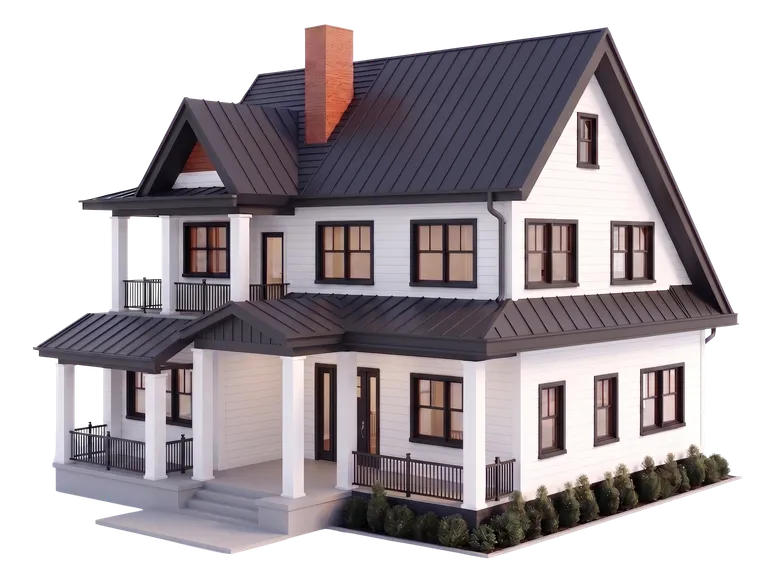
What exactly are you paying for?
You can spend hundreds of thousands, possibly millions of dollars, building or renovating your home and end up living in a beautifully polished turd.
And the worst part? You probably won’t even know it.
Your builder dresses well, speaks professionally, has a beautiful website, drives a nice truck, and has built a few of your friends’ homes. He’s got a great reputation in the community. His marketing makes him look like an expert, and naturally, you assume that someone charging that kind of money knows what he’s doing.
But what exactly are you paying for?
A house that looks good? Or a house that’s actually built right?
Because those are two completely different things.
Some of the Worst Homes I’ve Seen Have Been the Most Expensive
Some of the worst homes I’ve ever assessed have also been some of the most expensive and aesthetically beautiful.
I’m talking about multimillion-dollar custom homes with stunning architecture, elaborate finishes, expensive materials, and incredible attention to detail. At least the details you can see.
But behind all that beauty, I’ve found some of the worst-performing buildings I’ve encountered in my career.
Inefficient, uncomfortable, moisture-ridden, full of mold growth, mechanically deficient, and fundamentally flawed.
Homes that look like masterpieces but function like disasters.
And who’s paying the price? The homeowners.
They’re suffering physically, financially, and emotionally. They’re hemorrhaging money trying to diagnose and correct problems that should have never existed in the first place. Some are dealing with serious health concerns that may be associated with the very environment that’s supposed to protect them.
And for what?
Because they trusted the wrong person? Because their builder was articulate, dressed professionally, had an impressive portfolio, and came highly recommended?
The price tag of a home does not determine its quality. And a builder’s reputation does not guarantee competence.
I’ve witnessed this firsthand, over and over again.
The Construction Industry Has an Accountability Problem
Here’s something most homeowners don’t understand.
A builder doesn’t necessarily have to do anything right to deliver a finished product that looks impressive.
He doesn’t have to understand building science to make a house look beautiful. He doesn’t have to understand moisture movement, air pressure, thermal boundaries, or mechanical systems to sell you a million-dollar home.
He can hire subcontractors who don’t understand any of those things either.
And once the drywall is installed, the walls are painted, and the expensive finishes are in place, how in the hell would you know the difference?
You wouldn’t.
The problems are concealed behind the finishes, sometimes for years, until the building starts showing symptoms or the occupants start having problems.
What’s even more disturbing is the mentality I’ve encountered throughout this industry.
“If the inspector doesn’t ask for it, we don’t have to do it.”
Think about that for a minute.
Instead of asking what it takes to construct a healthy, durable, comfortable, and efficient home, some builders are making decisions based on what they can get past the inspector.
The building code establishes minimum requirements. It’s not an optional checklist based on what the inspector happens to catch.
Manufacturer installation instructions don’t suddenly become irrelevant because nobody looked at them. Industry standards don’t become meaningless because the contractor doesn’t understand them.
Yet this is the mentality I’ve encountered time and time again.
And somehow, these people are considered professionals.
And Your HVAC Contractor? In Many Cases, He’s Even Worse.
An HVAC contractor doesn’t have to properly design a mechanical system to make equipment blow hot and cold air.
He can install equipment without performing proper heating and cooling load calculations. He can throw together a duct system without engineering the air distribution. He can completely disregard static pressure, airflow, return-air pathways, moisture management, filtration, and ventilation.
The equipment starts. Cold air comes out of the registers. The thermostat eventually reaches its setpoint.
He collects his money, and everybody thinks he did a good job.
Meanwhile, that same system may be pulling contaminated air out of the attic or crawlspace, creating significant pressure imbalances, drawing humid outdoor air into the building, failing to control indoor humidity, and distributing pollutants throughout the occupied spaces.
And I’ve seen this in homes costing millions of dollars.
When the homeowner starts complaining, what happens?
Another contractor shows up with another product to sell.
A UV light. Duct cleaning. Zoning. Different equipment. Maybe another service contract.
Everybody has something to sell, but who’s actually figuring out what’s wrong with the house?
Thousands of dollars get thrown at symptoms while the underlying deficiencies remain.
Just because your HVAC system blows hot and cold air doesn’t mean it’s functioning properly. And just because someone holds a mechanical contractor’s license doesn’t mean they understand how to design and install a complete mechanical system.
But the House Passed Inspection!
This one really gets me.
Homeowners place an unbelievable amount of faith in the inspection process.
“The city inspected it.”
“The parish passed it.”
“The builder said everything was up to code.”
And that’s supposed to give you peace of mind?
Are you kidding me?
I’ve walked into homes with deficiencies so obvious that I cannot comprehend how they made it through construction without somebody questioning what was being done.
But they passed inspection.
Understand something. Passing an inspection doesn’t mean the house was built correctly. It means it passed whatever the inspector evaluated at that particular point in time.
Most code inspections are not comprehensive building science assessments. Inspectors are generally not measuring duct leakage, evaluating building pressure relationships, verifying the continuity of the air barrier, reviewing complete mechanical designs, or determining whether the building will manage moisture properly over time.
And the technical competence of inspectors varies tremendously.
The builders know this. The subcontractors know this.
And too often, the goal isn’t to build it right. The goal is to get it passed.
And What About Your Home Inspector?
Ha. You’re kidding, right?
The person who’s supposed to give you some level of confidence before you make one of the largest financial decisions of your life?
Let me be clear. There are knowledgeable home inspectors with years of construction experience who understand what they’re looking at.
And then there are people who take a 2-day class and suddenly market themselves as authorities on residential construction.
You’re about to spend hundreds of thousands, possibly millions of dollars, and you’re trusting someone who may have very little practical understanding of construction, mechanical systems, moisture dynamics, or building science.
Most standard home inspections are primarily visual and extremely limited in scope compared to an actual building performance assessment.
They’re not evaluating how the building functions as a complete system.
Yet homeowners walk away from a relatively clean inspection report believing they’re purchasing a properly constructed home.
That’s an enormous assumption.
And sometimes a very expensive one.
A Home Is a System, Not a Collection of Subcontractors
This is where the construction industry absolutely falls apart.
The roofer installs the roof. The insulation contractor installs insulation. The HVAC contractor installs the mechanical equipment. The electrician does his thing. The drywall contractor covers everything up.
Everybody completes their little piece, collects their money, and moves on.
But who’s making sure all these systems actually work together?
Who’s accounting for the fact that a leaky return duct can pull contaminated attic air directly into the mechanical system and distribute it throughout the home?
Who’s considering how pressure differences move humid air through wall cavities, ceiling assemblies, and other concealed spaces?
Who’s thinking about how the insulation, air barrier, vapor control, HVAC system, ventilation, and dehumidification all interact?
Who’s actually looking at the house as a complete system?
In far too many projects, nobody.
And this is exactly why some of the most expensive houses I’ve assessed have also been some of the worst performing.
You cannot assemble a bunch of expensive materials and equipment, put beautiful finishes over everything, and expect the house to perform properly.
That’s not how buildings work.
A house is a system. Everything affects something else. And when nobody understands how those systems interact, the homeowner gets stuck dealing with the consequences.
The Homeowner Gets Stuck With the Bill
This is the part that bothers me more than anything.
I’ve walked through beautiful homes where the homeowners are absolutely exhausted.
They’ve spent years dealing with high humidity, musty odors, mold, uncomfortable rooms, mechanical failures, condensation, and moisture problems nobody seems capable of figuring out.
Some are dealing with significant health issues.
They’ve hired contractor after contractor, spent thousands, sometimes tens or hundreds of thousands of dollars, and still don’t have a solution.
Why?
Because nobody has actually identified and corrected the root cause.
They keep getting sold another product, another service, another Band-Aid.
Meanwhile, the builder has moved on to the next custom home. The HVAC contractor has moved on to the next installation. The inspectors signed off and went home.
And the homeowner is left living in an expensive, beautiful house that’s uncomfortable, inefficient, deteriorating, and potentially affecting their health.
These people paid professionals to build their homes correctly. Now they’re paying another group of professionals to figure out everything the first group did wrong.
How in the hell is that acceptable?
Professional Marketing Doesn’t Equal Professional Competence
I don’t care how beautiful your builder’s website is. I don’t care how many awards he’s won, how expensive his homes are, or how many people in the community recommend him.
None of that proves he understands how a building works.
None of that proves he understands moisture management, mechanical design, enclosure performance, air pressure, or the interaction between the systems that determine whether a home performs properly.
And the same goes for HVAC contractors.
You can have 30 years of experience doing something wrong.
You can build hundreds of homes and never understand the fundamental principles that determine their performance.
You can build an incredible reputation for producing beautiful houses while leaving behind serious deficiencies concealed within the building assemblies.
And because many of these problems don’t show up immediately, the builder may never even realize how poorly his houses are performing.
Or worse, he knows and doesn’t care.
There is a tremendous difference between being successful in the construction industry and actually being competent at construction.
Homeowners need to understand that difference before handing someone their money and trusting them with their family’s home.
The Industry Needs to Be Held to a Higher Standard
The answer isn’t more expensive materials, more equipment, or another government inspection.
It’s competence. Accountability. Proper design. Proper execution. And verification.
Builders need to understand the buildings they’re constructing, not just how to manage subcontractors, build a schedule, and select finishes.
HVAC contractors need to understand mechanical design, air distribution, moisture management, and building pressure relationships, not just how to connect equipment and make it run.
And homeowners need to stop assuming that expensive means quality, licensed means competent, and inspected means correct.
There are excellent builders and contractors who take their responsibilities seriously. I know some of them personally. But there are also far too many who have built successful businesses around appearances rather than technical competence.
I don’t care how beautiful a house looks if it doesn’t function properly.
Does it protect the people living inside it? Does it manage moisture? Does the building enclosure perform? Do the mechanical systems actually do what they’re supposed to do? Is the indoor environment healthy?
Those are the things that matter.
The beautiful countertops, elaborate trim, expensive fixtures, and impressive architecture don’t mean a damn thing if the building itself is failing.
So, How Do You Know Your Home Was Built Right?
That’s the question homeowners need to start asking.
Not how impressive the builder’s portfolio looks. Not how many of your friends used him. Not how beautiful the finished house appears.
And certainly not whether the inspector signed off on it.
How do you know the house actually performs the way it’s supposed to?
Because I can tell you from firsthand experience that some of the most beautiful and expensive custom homes I’ve ever stepped foot in have been some of the worst-performing buildings I’ve encountered.
Behind those finishes, I’ve found serious moisture problems, microbial contamination, deficient mechanical systems, and fundamental construction failures that have cost homeowners tremendous amounts of money. In some cases, these conditions have raised serious concerns about the health of the people living inside.
These homeowners trusted people who presented themselves as professionals. They paid them accordingly.
And now they’re living with the consequences.
You can spend millions of dollars building or renovating your home, but if the people designing and constructing it don’t understand how a building actually works, all you’ve purchased is a very expensive, beautifully polished turd.
Need answers about your home?
ACC Building Performance is local to the Gulf South and serves the entire United States, finding and documenting the root cause of moisture, mold, HVAC, and indoor air quality problems.
Book Your Assessment