Building Science · 10 min read
Stop Treating Symptoms. Start Solving Problems.
In Southeast Louisiana, many homes are failing as whole systems. Cleaning surfaces and swapping equipment without correcting the underlying causes is treating symptoms, and the same problems get passed on to the next family.
The Harsh Reality of Our Housing Stock
There is a harsh reality in the building performance industry that doesn’t get discussed nearly enough, particularly when it comes to homeowners dealing with environmental sensitivities, chronic health concerns, and homes suffering from systemic building failures.
Here in Southeast Louisiana, we live in an exceptionally demanding environment. Extreme humidity, prolonged cooling seasons, heavy rainfall, and substantial moisture loads place tremendous demands on our homes. Unfortunately, the quality of residential construction has deteriorated to a point that, quite frankly, is difficult to comprehend.
And the consequences are becoming increasingly apparent.
I’m not talking about an isolated roof leak, a little condensation on a supply register, or a small area of microbial proliferation behind a bathroom vanity.
I’m talking about homes with significant deficiencies throughout the entire building.
Homes with compromised water-resistive barriers (WRBs), improperly installed flashing, roof leaks, massive air infiltration, poorly designed and executed mechanical systems, inadequate ventilation, uncontrolled humidity, condensation within concealed building assemblies, and widespread microbial proliferation.
And more often than not, these deficiencies aren’t independent of one another. They’re interconnected.
The house isn’t suffering from one isolated problem. The house itself is a system that’s failing.
The Hardest Conversations Are With the People Who Can Least Afford the Solutions
Some of the most difficult situations I encounter involve homeowners who are already struggling with significant health concerns.
These are individuals and families who may have spent years searching for answers, visiting physicians, undergoing testing, and investing thousands of dollars in products, treatments, and remediation efforts.
By the time they contact me, they’re often physically, emotionally, and financially exhausted.
Then I assess their home.
And what I discover is sometimes devastating.
The problems aren’t confined to one room, one piece of ductwork, or one section of drywall. They’re distributed throughout the building, involving multiple assemblies and mechanical systems.
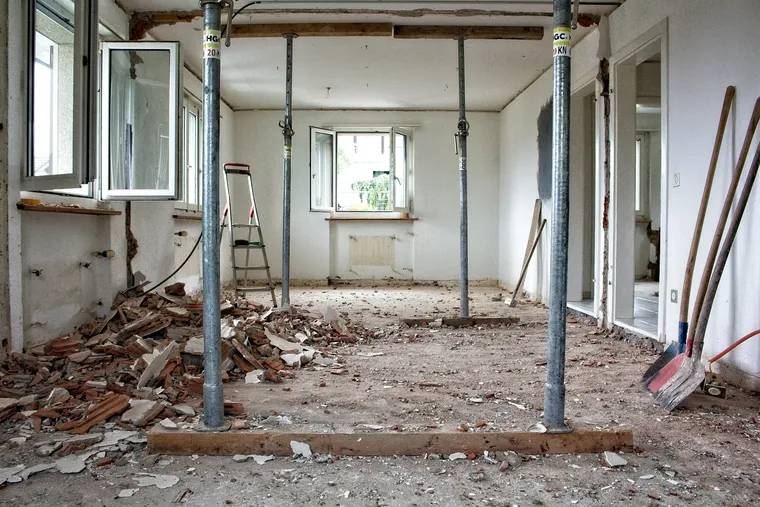
Correcting these conditions properly may require substantial demolition, comprehensive remediation, reconstruction of the building enclosure, mechanical system modifications or replacement, and significant improvements to moisture management and environmental controls.
In some cases, we’re essentially talking about rebuilding substantial portions of the home.
And the homeowner simply doesn’t have the financial resources to do it.
So what do you tell them?
That’s a question I wrestle with regularly.
I cannot responsibly declare that someone’s home is toxic or tell them they must move. Determining the health implications of an individual’s environmental exposures involves considerations well beyond a building assessment.
But I can explain the conditions I’ve documented, their potential implications, and what I would personally do if my family were in the same situation.
And sometimes my response is very simple:
“I wouldn’t live here with my family. I wouldn’t knowingly expose my family to these conditions. I wouldn’t want to be here.”
That’s not a medical diagnosis. It’s my personal judgment based on the building conditions I’ve observed.
But there’s another harsh reality.
Where are these people supposed to go?
They can sell their house and buy another one down the street, but there’s a very real possibility that the next house will have many of the same deficiencies.
Different address. Different floor plan. Same fundamental problems.
That’s the unfortunate state of much of our existing housing stock.
We Have an Industry That Has Become Far Too Comfortable Treating Symptoms
One of my greatest frustrations is watching the construction and restoration industries repeatedly address the visible symptoms of building failures without correcting the underlying causes.
We discover microbial proliferation, so we remove the affected drywall, clean the surfaces, apply an antimicrobial treatment, and reinstall new materials.
But what caused the moisture problem?
Was it uncontrolled air infiltration? A compromised WRB? Improper flashing? A poorly executed roof assembly? Inadequate mechanical design? Excessive indoor humidity? Condensation resulting from discontinuities in the building’s air and thermal boundaries?
Was it a combination of several of these deficiencies?
If those questions aren’t answered and the underlying problems aren’t corrected, what exactly have we accomplished?
We may have temporarily improved a localized condition, but we’ve left the mechanisms responsible for that condition intact.
And when those same conditions return, we’re surprised when the problems return with them.
Remediation without appropriate source correction is not a comprehensive solution.
The same applies to mechanical systems.
We can replace a contaminated air handler, clean the ductwork, install a better filtration system, or add a dehumidifier. Some of those improvements may be necessary and beneficial.
But if the building enclosure is allowing massive quantities of uncontrolled outdoor air to enter the home, or the mechanical systems are improperly designed, installed, and operated, we’re still fighting the same underlying conditions.
We’re treating symptoms.
We’re not solving the problem.
Building Science Isn’t Optional in Our Climate
In Southeast Louisiana, moisture management isn’t a luxury or an advanced feature reserved for high-end custom homes.
It’s fundamental to building durability, indoor environmental quality, and occupant comfort.
Our homes are exposed to extreme conditions for much of the year. High outdoor dew points, intense solar exposure, wind-driven rain, and prolonged periods of mechanical cooling create substantial demands on building assemblies and HVAC systems.
That means every major component of the home must be considered as part of an interconnected system.
The roofing assembly must manage bulk water.
The WRB and flashing systems must effectively drain water and protect vulnerable materials.
The air-control layer must limit uncontrolled air movement through the enclosure.
The thermal-control layer must be continuous and properly aligned with the air boundary.
Mechanical systems must be appropriately designed, installed, commissioned, and operated to manage both sensible and latent loads.
Ventilation must be intentional, controlled, and appropriate for the building and its occupants.
And all of these components must work together.
You cannot simply install a high-efficiency HVAC system into a poorly executed building enclosure and expect exceptional performance.
Likewise, you cannot create a durable, moisture-resilient home by concentrating exclusively on insulation, air sealing, or mechanical equipment while ignoring the rest of the building.
A home is a system. When critical components of that system are improperly executed, the consequences often extend far beyond the original deficiency.
Doing It Right Is Expensive, Invasive, and Labor-Intensive
This is another reality that deserves more transparency.
Properly correcting systemic building failures can be extraordinarily expensive.
It’s often invasive. It’s intrusive. It’s labor-intensive. And depending on the extent of the deficiencies, it can require homeowners to temporarily relocate while work is being performed.
Sometimes we’re removing large portions of interior finishes, exposing concealed assemblies, correcting framing or enclosure details, replacing damaged materials, rebuilding mechanical systems, and reconstructing spaces that looked perfectly acceptable on the surface.
That’s not something most homeowners anticipate when they first discover a moisture or indoor environmental quality problem.
And it’s certainly not something every family can afford.
I have tremendous empathy for these homeowners.
I’ve personally experienced the challenges associated with these types of environments. I understand the frustration, the financial strain, and the emotional toll that comes with trying to find answers while watching your home become a source of concern rather than a place of comfort and security.
But empathy doesn’t change the physics of a building.
And financial limitations don’t make the underlying deficiencies disappear.
I can help a homeowner understand the problems, prioritize the most consequential deficiencies, and develop a realistic path forward.
What I cannot do is knowingly present a limited, isolated repair as a permanent solution to a systemic problem.
That would be doing the homeowner a disservice.
I’m Here to Solve Problems, Not Sell Band-Aids
My approach to building performance has never been about finding the cheapest way to temporarily make a problem disappear.
It’s about understanding why the problem exists and determining what is necessary to correct it.
That doesn’t mean every house needs to be completely gutted or every mechanical system needs to be replaced. The scope should always be determined by the actual conditions, the building’s design, and the extent of the deficiencies.
But when a home has widespread, interconnected failures, the solution must be comprehensive enough to address those failures.
And sometimes that means having a very difficult conversation with a homeowner.
If someone is looking for a $4,000 or $5,000 remediation to resolve a house with extensive enclosure failures, chronic moisture intrusion, widespread contamination, and fundamentally deficient mechanical systems, I may not be the right person for that project.
Not because I don’t care.
Quite the opposite.
I care enough to be transparent about what is actually required.
I understand that some homeowners simply cannot afford the necessary corrections. That reality genuinely weighs on me.
But I cannot compromise the integrity of my recommendations simply to make a project financially attainable.
I would rather explain why a limited repair may not achieve the homeowner’s objectives than accept their money for work I don’t believe will meaningfully correct the underlying problems.
I’m not interested in putting a Band-Aid on a failing building and calling it a success.
I’m interested in solving problems.
That’s what I believe my work is about.
We Need to Start Building Homes That Don’t Require These Conversations
As frustrating as these existing-home assessments can be, they reinforce something I’ve believed for a long time.
We have to do better as an industry.
Builders, contractors, remodelers, mechanical contractors, restoration professionals, and everyone involved in residential construction need to raise the standard.
Not just in the homes marketed as luxury, high-performance, or custom.
In every home.
We need better education, better planning, better designs, better execution, and meaningful quality assurance.
We need contractors who understand the relationship between air movement, heat transfer, moisture transport, mechanical operation, and building durability.
We need to stop assuming that passing a building inspection automatically means a home has been properly designed and constructed for long-term performance.
Building codes establish minimum requirements. They are not a substitute for comprehensive building science, thoughtful design, or proper execution.
And we need to stop accepting recurring moisture problems and premature building failures as normal.
Because every time we perform an inadequate repair, ignore an underlying deficiency, or reconstruct an assembly using the same flawed practices, we’re perpetuating the problem.
That house doesn’t disappear when the current occupants leave.
It gets sold.
Another family moves in.
And eventually, someone else inherits the same deficiencies.
If we don’t fundamentally improve the way we build, renovate, and remediate homes, our children and grandchildren will be dealing with the same problems we’re dealing with today.
My Long-Term Vision: Homes People Can Move Into With Confidence
One of my long-term goals is to develop a portfolio of properly designed, constructed, and maintained homes that can serve as an alternative for families struggling with problematic living environments.
Whether through new construction, carefully executed renovations, or long-term rental properties, I envision homes where building performance and indoor environmental quality are priorities from the very beginning.
Homes with properly executed building enclosures, effective bulk-water management, controlled air infiltration, continuous thermal boundaries, appropriately designed mechanical systems, intentional ventilation, effective humidity control, and carefully selected low-emitting building materials.
Homes where critical systems have been verified and commissioned rather than simply installed and assumed to function correctly.
No home can guarantee perfect indoor environmental conditions or an individual’s recovery from illness.
But we can absolutely design, construct, operate, and maintain homes that significantly reduce preventable moisture-related problems and provide more controlled indoor environments.
My hope is that one day, when I encounter a family whose existing home requires more extensive corrections than they can reasonably afford, I’ll have another option to offer.
Not just another house on the market with an unknown history and potentially similar deficiencies.
But a home that has been intentionally built or renovated to a higher standard.
A home they can move into with greater confidence while they focus on their health, their families, and their future.
That’s something I would genuinely like to accomplish.
The Bottom Line: We Have to Stop Kicking the Can Down the Road
Until that vision becomes a reality, I have to operate within the conditions of today’s housing market.
And the reality, particularly here in Southeast Louisiana, is that many of the homes I assess have problems that extend far beyond what a simple, isolated remediation can correct.
That doesn’t mean every limited repair is worthless. Targeted interventions can be effective when the underlying causes are properly identified and the scope is appropriate.
But when we’re dealing with widespread systemic failures, a few thousand dollars spent cleaning surfaces, replacing isolated materials, or installing another piece of equipment may do very little to address the conditions responsible for the problems.
We have to stop pretending otherwise.
The construction industry needs to take greater responsibility for the long-term performance of the homes it produces.
Restoration professionals need to look beyond visible damage and understand why it occurred.
Mechanical contractors need to recognize that their equipment operates within a building, not independently of it.
And homeowners deserve accurate assessments, transparent recommendations, and realistic expectations about what it will take to correct the problems in their homes.
I know these conversations are difficult.
I know the solutions can be expensive.
And I know not everyone has the resources to do everything that needs to be done.
But none of that changes the underlying reality.
We cannot continue treating symptoms while ignoring the systemic failures responsible for them.
Because if we do, we’re not improving our housing stock.
We’re simply passing the same problems, the same expenses, and the same frustrations on to the next generation.
At some point, we have to stop putting Band-Aids on failing buildings and start solving the actual problems.
That’s the standard I’m committed to.
And it’s the standard I believe our industry desperately needs.
Need answers about your home?
ACC Building Performance is local to the Gulf South and serves the entire United States, finding and documenting the root cause of moisture, mold, HVAC, and indoor air quality problems.
Book Your Assessment