Building Science · 5 min read
Why All the Hate on SPF Insulation?
Spray foam gets blamed for a lot of failures, but the real question is whether the attic, HVAC, moisture, and pressure strategy were designed and installed correctly.
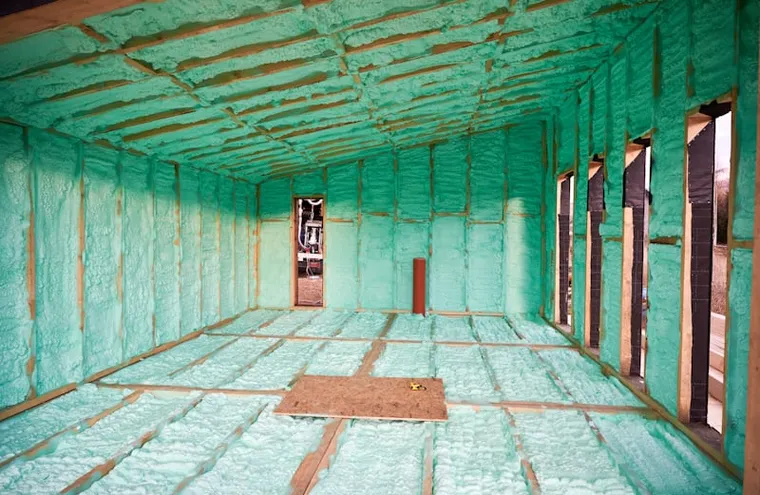
Spray foam gets blamed for everything.
I have heard every argument under the sun about why spray polyurethane foam, or SPF, is bad. It traps moisture. It causes roof failures. It hides leaks. It off-gasses. It makes homes unhealthy. It cannot dry. It is impossible to remove.
It probably killed somebody’s toaster too.
Let’s talk reality.
The real problem is the vented attic.
The reality is that vented attics create a whole host of performance, durability, comfort, efficiency, and indoor air quality issues. In my market, 99.99% of HVAC systems are installed in vented attics, which means we are installing the most critical mechanical system, the very system responsible for the health and comfort of the occupants, in one of the harshest environments in the home.
Then we wonder why we have problems. Duh.
If you want a healthy, high-performing home, the attic must either be completely disconnected from the occupied breathing zone of the home, good luck with that, or be brought fully within the building’s primary air, pressure, and thermal boundary.
In retrofit applications where budget matters, SPF solves a lot of problems. Compared to many alternative encapsulation methods, it is relatively affordable, practical, and efficient to install.
SPF is not magic. It has to be installed correctly.
Like any building product, SPF must be installed correctly. I tell my clients all the time: I am not here to play games. I am here to solve problems.
I am not going to let an endless list of hypothetical “what ifs” stop me from solving real problems today.
Can we encapsulate an attic without SPF? Absolutely. But we are limited mainly by the client’s budget, available materials, and, more importantly, the labor force available to install those assemblies correctly.
Many contractors struggle to execute basic building assemblies without major defects, much less something as complex as a double-roof assembly or properly fitting batt insulation into a complex roof structure full of valleys, dormers, hips, chases, and penetrations.
Design can address legitimate concerns.
For homeowners concerned about potential off-gassing and who have the budget, there are additional strategies available. An encapsulated attic can be ventilated and pressure-managed so attic air does not communicate with the occupied living space and does not enter the air stream moving through the heating and cooling system.
Proper air sealing, pressure control, and mechanical ventilation can be used to isolate the attic environment while still capturing the performance benefits of encapsulation.
When SPF is installed correctly, the roof is properly maintained, moisture is controlled, and that control is continuously maintained, the horror stories simply never happen in my experience.
Failures happen when the system is wrong.
Problems occur when the foam is off-ratio, the substrate contains excessive moisture, there is an active roof leak, the HVAC contractor does not understand moisture and pressure control, or the building is not properly designed and commissioned.
In those situations, the problems become amplified because the attic is no longer receiving the same level of heat energy exchange as a vented assembly.
The bottom line is simple: when SPF is used and installed properly, the advantages far outweigh the disadvantages.
It solves countless building performance problems. It improves the environment around HVAC equipment. It helps control moisture. It improves comfort. It improves efficiency. It can be a critical component of creating a healthier home.
The material is not the strategy.
Like any building system, success comes down to proper design, installation, commissioning, and maintenance, not the material itself.
At the end of the day, SPF is simply plastic. It is another building material that has the potential to be done wrong, just like everything else in the house.
One resource I highly recommend is Spray Jones. Whether you agree with everything he says or not, he has documented countless successful SPF projects and provides valuable real-world insight into what proper installation looks like.
The internet is full of examples of SPF failures. What you do not hear nearly as much about are the millions of square feet of SPF quietly performing exactly as intended every single day.
In my experience, when those factors are in place, SPF is one of the most effective tools we have, and it is absolutely worth the investment.
Need answers about your home?
ACC Building Performance is local to the Gulf South and serves the entire United States, finding and documenting the root cause of moisture, mold, HVAC, and indoor air quality problems.
Book Your Assessment